Stuart and Molly Sloan Precision Oncology Institute Research Funding Opportunities
Since 2024, the Sloan Precision Oncology Institute has supported innovative precision oncology research through our research funding awards. To date, ten projects have been funded through our Ignition and Technology Dissemination Awards.
2026 Sloan Precision Oncology Institute Research Funding Awards
On May 15, 2026, the Stuart and Molly Sloan Precision Oncology Institute once again requested innovative, forward-thinking proposals centered on Investigators’ interpretation of Precision Oncology that address a research hypothesis (IGNITION Award) or that focus on disseminating novel technologies to the research community (TECHNOLOGY DISSEMINATION Award).
Prior to submitting applications, Investigators were required to submit a 1-page Letter of Intent providing a brief description of the research to be conducted and its relevance to Precision Oncology. LOIs were due on June 22; successful LOI applicants were informed on July 10 and asked to submit a full proposal by August 17, 2026. It is anticipated that one Technology Dissemination Award and three Ignition Awards will be supported.
Read the Funding Announcement for full details.
Funding Announcement - Call for LOI and Request for Applications
The mission of the Stuart and Molly Sloan Precision Oncology Institute is to improve the outcomes of individual patients with cancer and reduce the impact of cancer on our communities by developing and implementing personalized prevention, early detection, and treatment strategies. The Sloan Precision Oncology Institute requests innovative, forward-thinking applications for funding that are focused on achieving these goals.
The letter of intent and subsequent application should propose work in the context of Precision Oncology. However, the scope of Precision Oncology is broad. The applicant should provide a rationale for how their research proposal pertains to Precision Oncology. Funding is currently available in two categories:
- Ignition Award – One year project funding to establish feasibility; address a Precision Oncology related hypothesis; and/or generate preliminary data to support future large-scale studies and/or grant applications.
- Technology Dissemination Award – Two-year project funding for developing technology and infrastructure to provide access to novel methods, resources or approaches developed by Fred Hutch Cancer Center, University of Washington and Seattle Children’s faculty/staff.
Awards will be funded based on quality and as final budget allows. It is anticipated that 1 Technology Dissemination Award of up-to $250,000 direct costs (plus applicable F&A/indirect costs) over two years, and 3 Ignition Awards, of up-to $75,000 direct costs each (plus applicable F&A/indirect costs) over 1 year will be supported.
Important Dates
| Release Date | May 15, 2026 |
| LOI Due Date | June 22, 2026, by 5pm PDT |
| Notification of Application Eligibility Decision | July 10, 2026 |
| Application Due Date | August 17, 2026 by 5pm PDT |
| Award Announcement | September 2026 (by September 30) |
Application Information and Submission Site
Prior to submitting full proposals, applicants will submit a Letter of Intent providing a brief description of the research to be conducted and its relevance to Precision Oncology. Successful LOI applicants will be notified of their eligibility on July 10, 2026 and asked to submit a full application by August 17, 2026. Both LOIs and full applications will be submitted using InfoReady, Fred Hutch’s centralized database for external, internal, and limited applicant award opportunities. The InfoReady page for the Stuart and Molly Sloan Precision Oncology Institute Funding Opportunity can be accessed via the portal homepage or by using the following links:
- Ignition: https://fredhutch.infoready4.com/#competitionDetail/2016051
- Technology Dissemination: https://fredhutch.infoready4.com/#competitionDetail/2015984
Complete award details, application instructions, and supporting documents are available on the InfoReady page for each award. Once logged in, letters of intent can be started, saved, and submitted through the “Submit LOI” button on the LOI page for the award. After July 10, the LOI page will be converted and applications for eligible projects can be started, saved, and submitted through the “Apply” button on the funding opportunity page for the award.
Fred Hutch Applicants. Please log in with your Fred Hutch Cancer Center username and password.
University of Washington and Seattle Children's Applicants. Please create an account by selecting "Register" on the InfoReady homepage. Please use the applicant's primary institutional affiliation email address. If you would like an administrator to submit on your behalf, the primary applicant will need to sign-in and designate this role.
Eligibility Criteria
The project leader must hold a Fred Hutch, University of Washington, or Seattle Children’s faculty appointment. Trainees (including postdoctoral research fellows and graduate students who intend to remain at Fred Hutch, University of Washington or Seattle Children’s for the duration of the award) are encouraged to discuss this proposal with their faculty mentors, and to consider applying as a co-project leader. Senior trainees in particular are encouraged to consider co-leading the Technology Dissemination Awards.
Funding Timeline and Mechanism
Letters of Intent are due by June 22, 2026. Successful applicants from LOI submissions will be informed by July 10, 2026. Full applications are due by August 17, 2026. Reviews will occur from mid-August through September; funding is expected to begin by November 2026. Access to award funds is subject to Fred Hutch Office of Sponsored Research (OSR) review and receipt of all compliance documents such as COI disclosures, PI Assurances, etc.
- Ignition Award
- Applications for up to $75,000 in direct costs for 1 year. F&A/indirect costs will be funded/awarded at the applicant institution’s applicable F&A rate.
- IACUC and IRB approvals must be secured within 4 months of award notification. Funds will be awarded only after IRB and IACUC approval (if relevant), and, if the 4-month timeline is exceeded, funding will be withdrawn.
- Technology Dissemination Award
- Applications for up to $125,000 in direct costs per year for each of 2 years. F&A/indirect costs will be funded/awarded at the applicant institution’s applicable F&A rate.
- IACUC and IRB approvals must be secured within 4 months of award notification. Funds will be awarded only after IRB and IACUC approval (if relevant), and, if the 4-month timeline is exceeded, funding will be withdrawn.
Sloan Precision Oncology Institute 2025 Ignition and Technology Dissemination Awardees
In early 2025, the Stuart and Molly Sloan Precision Oncology Institute invited investigators at Fred Hutch Cancer Center, University of Washington and Seattle Children’s Research Institute to submit innovative, forward-thinking proposals centered on Precision Oncology that address a research hypothesis (Ignition Award) or that focus on disseminating novel technologies to the research community (Technology Dissemination Award). A total of 34 outstanding applications were submitted.
After a thorough review process, three Ignition and two Technology Dissemination projects were selected for funding. Ignition Awards will provide $75,000 in funding for one year, and Technology Dissemination Awards will provide funding of $250,000 over two years. This year, funding will support projects led by Investigators at Fred Hutch and University of Washington and represent a diverse range of research to advance precision oncology.
2025 Ignition Awards
Igniting targeted treatment strategies
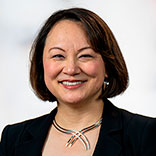
GRIP Imaging for Imaging T Cell Immunotherapy Responses
Dr. Delphine Chen, professor of Radiology at UW Medicine, Wil B. Nelp M.D. Endowed Professorship in Nuclear Medicine, and director of Molecular Imaging and Therapy at Fred Hutch, was awarded an Ignition Award for her proposal titled “GRIP imaging for imaging T cell immunotherapy responses.” Delphine’s proposal aims to elucidate the kinetics of T-cell activation in response to immunotherapy by utilizing novel imaging modalities. This approach will enable enhanced clinical decision-making support for determining the duration of therapy and the risk of toxicity to internal organs, as well as assessing the overall efficacy of the immunotherapy regimen.

Understanding and Exploiting MYC-Network Interactions to Thwart MYC Addicted Cancers
Dr. Robert (Bob) Eisenman, professor in Fred Hutch’s Basic Sciences Division, was awarded an Ignition Award for his proposal titled “Understanding and exploiting MYC-network interactions to thwart MYC-addicted cancers.” Bob’s proposal focuses on an innovative approach to interfering with the MYC family of oncogenic transcription factors by targeting MondoA, a transcription factor that regulates metabolic and stress-response related gene expression. This work will focus on pancreatic adenocarcinoma by determining the molecular mechanisms of how inhibition of MondoA can arrest tumor cell growth in this disease state. This work has the potential for targeting tumor vulnerabilities across the spectrum of MYC-dependent cancers.

Identification of Aberrant Splicing-Derived Targets for Cancer Immunotherapies
Dr. Stanley Lee, an associate professor in Fred Hutch’s Translational Science and Therapeutics Division, was awarded an Ignition Award for his work focused on “Identification of Aberrant Splicing-Derived Targets for Cancer Immunotherapies.” Myeloid malignancies can comprise clonal mutations that drive widespread splicing dysregulation, cumulating in the production of tumor-specific peptides present on HLA molecules. This provides an opportunity for the identification of mutation specific targets, and Stanley intends to utilize ARTEMIS (a high-yield proteogenomic-platform), in conjunction with RNA-seq and proteomics data, to improve prediction capabilities for identifying novel immunotherapy strategies.
2025 Technology Dissemination Awards
Expanding access to precision oncology tools for broadening and improving research

Scorcher: Democratizing AI/ML Workflows for Precision Oncology
A Technology Dissemination Award went to Dr. Jeff Leek, vice president and chief data officer, J. Orin Edson Foundational Endowed Chair and professor in the Biostatistics Program at Fred Hutch, and co-investigator Dr. Stephen Salerno, a postdoctoral researcher in the Public Health Sciences Division, for their proposal centered on developing a shared approach to artificial intelligence (AI) and machine learning (ML) across the Fred Hutch/University of Washington/Seattle Children's Cancer Consortium. Jeff and Stephen have previously developed an AI/ML tool, termed Scorcher, that enables easy-to-use access to model development. Throughout the course of this award, they intend to pilot Scorcher with physician-investigator champions who have developed the necessary datasets ready for AI/ML input. These pilot collaborations will enable the identification of user needs, pain points and priorities, that can be adapted to expand access to Scorcher across the Cancer Consortium, alongside educational workshops and training.

Dissemination of a Single-Molecule-Sensitive Digital Flow Cytometer
Dr. Daniel Chiu, professor of Chemistry and Bioengineering at the University of Washington, was awarded a Technology Dissemination Award for his work involving the “Dissemination of a single-molecule-sensitive digital flow cytometer.” Extra cellular vesicles (EVs) secreted by cells provide an option for non-invasive, liquid biopsy in the early detection of cancer. Daniel and team have developed a highly sensitive methodology for EV capture and phenotyping and will utilize the support from this award to make the technology available to the Cancer Consortium as a shared resource in the Fred Hutch and UW Flow Cytometry cores. Further, dissemination of this novel technology will allow for continuous refinement of the technology, allowing for broad application across the research community.
Extending Congratulations and Thanks for Advancing Precision Oncology Research With Us Again in 2025
Congratulations to Drs. Delphine Chen, Bob Eisenman, Stanley Lee, Jeff Leek, Stephen Salerno and Daniel Chiu! We are excited to see the contributions each Investigator will make to advancing precision oncology research here at Fred Hutch and across the Cancer Consortium.
The Sloan Precision Oncology Institute team is very grateful to the faculty and community advisory board members that participated in the rigorous review process. Thank you also to the many members of our research community who submitted proposals for Ignition and Technology Dissemination Awards. The quality and innovation made funding decisions very difficult. Once again, the excellence and innovation of the research proposals from our applicants provides motivation to continue this RFA funding mechanism in the future.
2024 Ignition and Technology Dissemination Awards
In 2024, three Ignition and two Technology Dissemination projects were selected for funding. Information about our earlier awards are maintained here: Past Research Funding Awards.