Faculty in the Statistics in Epidemiology Hub develop statistical methods to guide population-level research on cancer prevention, early detection, and real-world outcomes. Their work supports the design and evaluation of screening programs, biomarker validation, and comparative effectiveness research, often in collaboration with national networks and large observational studies. Methodological innovations span microsimulation modeling, risk prediction, causal inference, and diagnostic accuracy evaluation, using data from cohort studies, electronic health records, and multi-source population datasets. This work helps shape screening guidelines, advance biomarker science, and inform public health policy across the cancer continuum.
Hub Faculty

Garnet Anderson
Chronic Disease Prevention · Longitudinal Cohort Studies · Women’s Health Research
Garnet Anderson is a clinical trialist and biostatistician whose leadership in the Women’s Health Initiative has shaped our understanding of cancer, cardiovascular disease, and chronic illness in postmenopausal women. Her work bridges population-based research and long-term disease prevention.

Elizabeth Brown
Infectious Disease Trials · Longitudinal Modeling · Prevention Strategies
Elizabeth Brown leads the design and analysis of global infectious disease trials, including studies of HIV, HPV, and COVID-19. Her research integrates longitudinal and survival modeling to evaluate prevention strategies and long-term health outcomes.
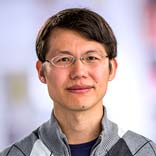
Chongzhi Di
Physical Activity Epidemiology · Wearable Data in Cohorts · Longitudinal Health Studies
Chongzhi Di develops statistical methods for analyzing functional and longitudinal data in epidemiologic studies of physical activity and sedentary behavior, particularly using data from mobile-health tools such as accelerometers and wearable ECG patches. His work supports real-time risk modeling for chronic disease outcomes by improving how high-resolution time series data are interpreted in population cohorts such as the Women’s Health Initiative.

Deborah Donnell
Infectious Disease Trials · HIV Prevention · Population Health Impact
Deborah Donnell leads global HIV prevention and PrEP trials, applying rigorous epidemiologic design and analysis to evaluate interventions and inform population‑level health outcomes.

Ruth Etzioni
Cancer Screening Policy · Population Modeling · Comparative Effectiveness
Ruth Etzioni is a leader in modeling the natural history of cancer and evaluating the benefits and harms of screening strategies. Her work underpins clinical guidelines for prostate, breast, and colorectal cancer, and informs debates about overdiagnosis and the appropriate use of emerging biomarkers. She uses Bayesian and simulation-based approaches to project long-term outcomes and shape national policy recommendations. Learn more at the Etzioni Lab.
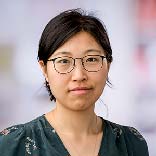
Fei Gao
Clinical Trial Analysis · Public Health Epidemiology · HIV Incidence Estimation
Fei Gao applies advanced statistical techniques to design and analyze clinical and population‑based studies (including HIV‑related and other public health efforts), translating methodological innovation into improved inference for real‑world epidemiologic and prevention research. Learn more at the Gao Lab.

Peter Gilbert
Vaccine Efficacy Trials · Infectious Disease Epidemiology · Population Health Impact
Peter Gilbert applies advanced statistical methods to the design and analysis of phase 2 and 3 vaccine and monoclonal trials for genetically diverse pathogens including HIV, SARS-CoV-2, dengue, and malaria. Through the Gilbert Group, he works to understand vaccine efficacy and population-level protection, contributing to global infectious disease prevention.

M. Elizabeth Halloran
Vaccine Efficacy Studies · Epidemic Dynamics · Population Health Impact
M. Elizabeth "Betz" Halloran, Professor Emeritus and National Academy of Sciences member, applies statistical and mathematical methods to study transmission, protection, and population-level impacts of vaccination. Her research has informed public-health strategies for epidemics including influenza, dengue, Ebola, cholera, Zika, and COVID-19. Dr. Halloran’s population-level research on vaccine impact has shaped global understanding of infectious disease prevention and continues to guide analytic strategies for epidemic response.

Chad (Qianchuan) He
Genetic Epidemiology · Somatic Mutation Analysis · Cancer Risk Modeling
Chad He develops statistical methods to analyze somatic mutations and their associations with complex traits, supporting epidemiologic studies of cancer risk and progression. His interdisciplinary work bridges AI, genomics, and biomedical science, advancing the use of multi-omics data for population-level studies of disease etiology and prevention.

Li Hsu
Colorectal Cancer Epidemiology · Gene-Environment Interaction · Risk Stratification
Li Hsu applies advanced statistical methods to genome-wide association studies (GWAS) and family-based studies, with a particular focus on colorectal cancer. With the Hsu Group, she leads methodological research on gene-environment interactions, pathway analysis, and tumor heterogeneity, contributing tools that improve population-level risk assessment and inform screening strategies.
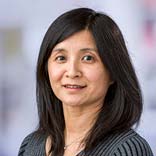
Ying Huang
Disease Screening · Surrogate Endpoint Evaluation · Population Health Biomarkers · Measurement Error Correction in Nutritional Epidemiology
Ying Huang applies advanced statistical methods to biomarker-driven studies in disease screening, risk prediction, and surrogate endpoint evaluation in cancer and infectious disease research, as well as to measurement-error correction in nutritional epidemiology. Her work bridges molecular-level data with population-level health outcomes, advancing more precise strategies for screening, prevention, and public-health decision-making.

Holly Janes
Vaccine Efficacy Trials · Infectious Disease Epidemiology · Population-Level Prevention
Holly Janes leads the statistical design and analysis for vaccine trials, including high-profile HIV prevention studies, and helps translate immunologic and clinical data into robust estimates of vaccine efficacy and public health impact. Her expertise guides large-scale prevention studies with global reach.

Wendy Leisenring
Survivor Cohort Studies · Long-Term Outcomes · Late Effects Epidemiology
Wendy Leisenring leads statistical design and analysis for long-term cohort studies of cancer survivors. She has served as lead statistician for the Childhood Cancer Survivor Study (CCSS) since 2004 and currently is principal investigator of the National Wilms Tumor Late Effects Study. Her work quantifies late effects of childhood cancer treatment, informs survivorship risk, and supports long-term outcomes and chronic‑disease surveillance in survivor populations.

Ross Prentice
Survival Analysis Methodology · Case‑Cohort Design · Surrogate Endpoint Methods
Ross L. Prentice, Professor Emeritus, led major chronic-disease prevention and population studies, most notably serving as PI or coordinating center head of the Women’s Health Initiative (WHI). His research on diet, hormone therapy, and lifestyle has shaped national understanding of cancer and cardiovascular risk, leaving a lasting legacy in large-scale cohort study design and public health.

Tim Randolph
Molecular Epidemiology · Biomarker‑Based Risk Assessment · Translational Data Analysis
Tim Randolph collaborates with clinical and public health researchers to apply advanced molecular-data methods in studies of cancer risk, drug response, microbiome associations, and long-term health outcomes. His statistical expertise helps translate molecular measurements into insights on disease risk and population‑level health.

Carolyn Rutter
Cancer Screening Evaluation · Simulation Modeling · Health Services Research
Carolyn Rutter is known for her development of microsimulation models that evaluate the long-term benefits and harms of cancer screening. Her research supports policy modeling efforts such as those commissioned by the US Preventive Services Task Force (USPSTF), and she brings expertise in Bayesian hierarchical models and meta-analysis of diagnostic test accuracy for use in evidence synthesis and health care decision-making.

Ching-Yun Wang
Measurement Error · Missing Data · Nutritional Epidemiology
Ching-Yun Wang develops robust statistical methods for epidemiologic studies involving measurement error, missing data, and joint modeling of longitudinal and survival outcomes. His work enhances the validity of findings in cancer prevention trials and nutritional epidemiology, including studies on diet, physical activity, and screening interventions. Dr. Wang’s methods address challenges in real-world data, enabling more reliable inference in population-based research.

Michael C. Wu
Microbiome Epidemiology · Translational Population Studies · Causal Inference in Omics
Mike Wu develops statistical tools for analyzing microbiome and translational medicine data in cancer epidemiology. His work includes population studies of cardiovascular disease risk, and his leadership in SWOG trials links methodologic innovation to clinical applications. The Wu Group advances AI-enhanced trial design and causal modeling in population settings.

Qian (Vicky) Wu
Immunotherapy Trials · Cancer Epidemiology · Treatment Response Prediction
Qian “Vicky” Wu leads development of statistical models and computational tools for biomarker, genetic, and molecular data analysis, including serum cytokine data analysis, immunohistochemical (IHC) data analysis, epigenetic (CUT&RUN, ChIP-seq, DNAse-seq), GWAS, RNA-seq, gene regulatory networks, and copy number variants (CNV) analysis. Most of her work is related with CAR-T immunotherapy. She is the lead biostatistician of more than 20 CAR-T trials running at Fred Hutch and Seattle Children’s. Also, she has developed several R tools, including TrialSize, CNVtest, ChIPtest, Spacelog, HDI_Shiny, TVCurves, SampleN, etc.

Lue Ping Zhao
Immunogenetics in Population Studies · Translational Epidemiology · Autoimmune Disease Risk
Lue Ping Zhao integrates genomic sequence modeling and object-oriented regression to uncover genetic mechanisms driving diseases such as Type 1 diabetes and cancer. His work connects HLA haplotypes to disease progression and supports population-level analyses through novel statistical genetics frameworks.
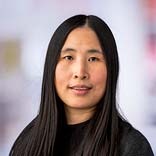
Yingqi Zhao
Cancer Screening Trial Design · Precision Public Health · Dynamic Treatment Regimes
Yingqi Zhao specializes in statistical learning methods to support personalized screening and treatment decisions. Her work on individualized treatment rules, adaptive clinical trials, and biomarker-guided interventions advances the field of precision public health, improving how trials and policies are designed to maximize benefit across populations.

Yingye Zheng
Biomarker Validation · Cancer Early Detection Cohorts · Risk Prediction Modeling
Yingye Zheng’s research focuses on statistical methods for evaluating biomarkers in prospective cohort and clinical trial settings. She develops tools to assess the predictive accuracy and clinical utility of diagnostic tests over time, and she co-leads multiple national initiatives on early detection and surveillance for prostate and bladder cancers.