Faculty in the Statistics in Genomics and Genetics Hub develop statistical and computational methods for analyzing high-throughput genomic and epigenomic data to advance biological discovery in cancer and other complex diseases. Their work focuses on false discovery control, high-dimensional inference, and integrative analysis across diverse molecular data types, including genome-wide association studies, sequencing, single-cell and spatial transcriptomics, and epigenomic assays.
Investigators design scalable, reproducible frameworks to study genetic architecture, gene–environment interactions, and regulatory mechanisms, enabling population-scale analyses of molecular processes underlying disease.
Hub Faculty
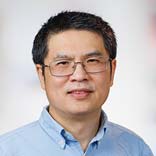
Chad (Qianchuan) He
Cancer Genomics · Somatic Mutation Analysis · Multi-Omics Integration
Chad He develops statistical methods for analyzing genomic data in cancer and other complex diseases, with a focus on somatic mutation detection, multi-omics integration, and gene–gene interactions. His interdisciplinary work in the He Lab combines machine learning, biostatistical theory, and bioinformatics to identify molecular drivers of disease across tumor types and genomic contexts.

Li Hsu
Genome-Wide Association · Gene-Environment Iinteractions · Genetic Risk Modeling
Li Hsu advances statistical methods for genetic epidemiology, including genome-wide association studies, gene–environment interactions, and integration of functional genomic data. The Hsu Group. focuses on modeling genetic architecture, network structure, and genomic instability to understand disease susceptibility and population-level genetic risk.

Charles Kooperberg
Genome-Wide Association · High-Dimensional Data · Integrative Genomics
Charles Kooperberg specializes in high-dimensional genomic data analysis, including integration of SNP, proteomic, and gene expression data. He develops foundational statistical methods for post-GWAS analysis, multi-ancestry studies, and characterization of genetic architecture in large population cohorts through his work in the Kooperberg Lab..

Jingyi Jessica Li
Transcriptomics · Translational Control · Single-Cell and Spatial Omics · Quantitative Trait Loci · Epigenomics
Jingyi Jessica Li develops statistical and bioinformatic methods for transcriptomic and epigenomic data, including tools for false discovery rate control, single-cell RNA-seq, and spatial omics simulation. Her work quantifies core biological processes and produces open-source tools for robust, scalable analysis across modalities. Learn more about her work at the JSB Lab.

Jing Ma
Microbiome · Network Inference · High-Dimensional Inference
Jing Ma develops statistical methods for microbiome data analysis, focusing on network-based enrichment, compositional regression, and robust high-dimensional inference. Her open-source tools support integrative analysis of microbiome and other omics data to study complex biological systems in disease and aging.
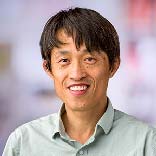
Wei Sun
Expression Quantitative Trait Loci (eQTL) Mapping · Spatial Transcriptomics · Deep Learning
Wei Sun develops statistical and deep learning methods for gene expression, epigenetic, and genomic data, with a focus on cell-type-specific eQTL analysis and spatial transcriptomics. The Sun Lab advances computational approaches for studying regulatory variation and molecular mechanisms in cancer and immunogenomics.

Michael C. Wu
Microbiome Analysis · Batch Effect Correction · Omics Methodology
ichael Wu develops statistical methods for large-scale microbiome and omics studies, including widely used tools like MiRKAT and ConQuR. His research with the Wu Group emphasizes robust inference, spatial proteomics, and AI integration in clinical trial design and data analysis.

Lue Ping Zhao
Immunogenetics · Gene-Environment Interactions · Statistical Genomics
Lue Ping Zhao develops statistical methods for analyzing complex, high-dimensional genetic and genomic data arising from immunogenetics research. Through interdisciplinary collaboration, his work has identified genetic and molecular features associated with susceptibility to and progression of autoimmune disease.